Cancer
(for schematic representation of cells: click here
(for schematic representation of cells: click here
Although we are accustomed to hearing of “cancer” as though it were one disease, it is actually many diseases, close to 100 in number. Some of the most common varieties include skin, lung, and colon cancer, as well as breast cancer in women and prostate cancer in men. Blood and lymph node cancers, known as leukemias and lymphomas, respectively, are widespread, whereas cancer of the kidneys, ovaries, uterus, pancreas, bladder, and rectum are included among the cancers that most often affect Americans. As this listing suggests, most cancers attack either body parts or systems and therefore are often classified anatomically or topographically; yet several characteristics unite these conditions. Cancer strikes the genes, which are carriers of genetic information that make up part of DNA (deoxyribonucleic acid), a molecule that appears in all cells. By gaining control at this level, the cancer is like a terrorist who has established a grip on all the communication or transportation systems in a country.
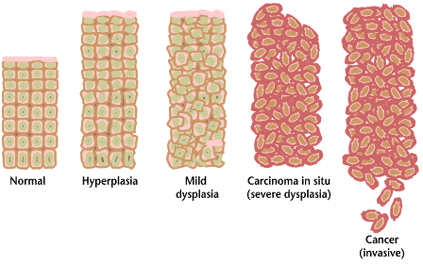
Many genes produce proteins that play a part in controlling the processes of cell growth and division. An alteration, or mutation, to the DNA molecule can disrupt the genes and produce faulty proteins, causing the cells to become abnormal and multiply. The abnormal cell begins to divide uncontrollably and eventually forms a new growth, known as a tumor, or neoplasm. In a healthy person, the immune system can recognize the neoplastic cells and destroy them before they have a chance to divide. Some mutant cells may escape immune detection, however, and survive to become tumors or cancers. (The immune system is discussed in Immunity and Immunology.)
Tumors can be either benign or malignant.A benign tumor is slow growing, does not spread or invade surrounding tissue, and, once removed, usually does not recur. A malignant tumor, on the other hand, invades surrounding tissue and spreads to other parts of the body. Therefore, even if the malignant tumor is removed, if the cancer cells have spread to the surrounding tissues, cancer will return. If the cancer cells are allowed to keep growing in number, migrating from the site of origin and spreading throughout the body, they eventually will kill the patient. Environmental factors that are responsible for the initial mutation in DNA are called carcinogens, and there are many types, which we discuss shortly. Additionally, some cancers have a genetic basis: in other words, a person can inherit faulty DNA from his or her parents, which can predispose the patient to cancer of one kind or another. While there is scientific evidence that both factors (environmental and genetic) play a role, less than 10% of all cancers are purely hereditary.
There are several different types of cancers. In addition to leukemias and lymphomas, mentioned earlier, there are carcinomas, or cancers that arise in the epithelium (the layers of cells covering the body’s surface and lining the internal organs and various glands). These types alone account for about 90% of all cancers. Some forms of skin cancer are melanomas, which typically originate in the pigment cells. Other forms of cancer include sarcomas (cancers of the supporting tissues of the body, e.g., bone, muscle, and blood vessels), and gliomas, or cancers of the nerve tissue.
Know how normal cells transform int ocancer cells : go here


 Posts
Posts


No comments:
Post a Comment